Energy Managers and Auditors Training for BEE

Overview of BEE and Its Role

BEE (Bureau of Energy Efficiency) was established under the Energy Conservation Act, 2001, under the Ministry of Power, Government of India.
Its primary objective is to:

  • Promote energy efficiency and conservation across industries, buildings, and transport.

  • Develop Energy Audit Procedures, Energy Manager/ Auditor certification, and Standards & Labeling Programs.

 Purpose of BEE Energy Audit Guidelines

The BEE Energy Audit Guidelines serve as a standardized framework for conducting professional energy audits in industrial, commercial, and institutional sectors.
They help ensure:

  • Uniform methodology across auditors and sectors

  • Quantifiable assessment of energy performance

  • Identification of energy-saving opportunities

  • Benchmarking and compliance with EC Act provisions


Online Course or Webinar for Energy Auditors Exam @Rs 500

  • Every month weekend, We conducts online webinars for Bureau of Energy Efficiency (BEE) Exams , India for Certified Energy Auditor (CEA) or Energy Manager exams
  • The syllabus is 50% thermal systems, 30% electrical systems, 20% audit methodology & finance.
    • Energy Manager exam = Papers 1, 2, 3.

    • Energy Auditor exam = Papers 1, 2, 3, 4.

  • Brief View of Exams structure:
    • Paper 1: General Aspects of Energy Management & Audit
    • Paper 2: Energy Efficiency in Thermal Utilities
    • Paper 3: Energy Efficiency in Electrical Utilities
    • Paper 4: Energy Performance Assessment for Equipment & Utility Systems

      whats app: 77740 18223

     Email: cfdflowengineering@gmail.com

  Faculty for BEE Exams 

Mr. Dinesh L. Jadhav,

  • B.E. – Mech.(COEP, Pune ), BOE, BEE Certified Energy Auditor
  •  Member Of  Boiler Operating Engineer (B.O.E) Examination Committee, Government of Maharashtra (GoM)


Syllabus for Energy Auditing Exams

Paper 1: General Aspects of Energy Management & Audit

  • Basics of energy, energy scenario (global & Indian)

  • Energy conservation & management principles

  • Energy auditing methodology (walk-through audit, detailed audit)

  • Energy audit instruments & measurements

  • Energy economics: life cycle costing, NPV, IRR, payback period

  • Energy performance indicators & benchmarking


Paper 2: Energy Efficiency in Thermal Utilities

  • Boilers: efficiency, combustion, steam generation, losses

  • Furnaces: types, operation, heat recovery

  • Steam systems: distribution, condensate recovery, traps, insulation

  • Dryers, heaters, ovens, kilns

  • Cogeneration & combined heat and power (CHP)

  • Cooling towers: performance, water treatment

  • Compressed air systems: efficiency, leak management

  • Waste heat recovery techniques

  • Case studies on thermal system energy savings


Paper 3: Energy Efficiency in Electrical Utilities

  • Electrical systems basics: power factor, load management

  • Transformers: efficiency, losses, selection

  • Motors: efficiency classes, load testing, variable speed drives (VSDs)

  • Lighting systems: lamps, ballasts, LED, controls

  • HVAC & refrigeration: efficiency measures, COP, system optimization

  • Pumps, fans, blowers: efficiency evaluation, system curves

  • Compressed air system (electrical side)

  • Power quality: harmonics, voltage stability, demand side management

  • Case studies in electrical energy efficiency


Paper 4: Energy Performance Assessment for Equipment & Utility Systems

  • Performance evaluation of boilers, turbines, compressors, HVAC, pumps, motors

  • Measurement & verification protocols

  • Energy performance indicators (EnPIs)

  • Instrumentation for energy audits

  • Monitoring & targeting (M&T) techniques

  • Energy action planning and reporting

  • Case studies: industry-wise best practices (cement, steel, textiles, paper, power plants, etc.)

Scope of Examination for Energy Managers and Auditors

  • The National Certificate Examination for Energy Managers and Auditors (NPC) is typically conducted in several countries, focusing on enhancing the capabilities of energy managers and auditors to promote energy efficiency and sustainable practices.
  • Here’s a general overview of what this certification entails
  • The purpose of  examination is  to equip professionals with the knowledge and skills necessary to conduct energy audits, manage energy resources effectively, and implement energy conservation measures in various sectors.
  • The examination aims to develop certified professionals who can conduct energy audits and implement energy management systems.
  • Certified professionals are equipped to help industries, commercial buildings, and other sectors reduce energy consumption and improve energy efficiency.

Eligibility

  • Candidates are usually required to have a background in engineering, science, or a related field.
  • Some certifications may also require a minimum level of professional experience in energy management or auditing.

Examination Structure

The exam typically consists of the following components:

  • Written Examination:
    • Tests candidates on theoretical knowledge related to energy management, energy auditing principles, energy efficiency technologies, and relevant regulations.
  • Practical Assessment:
    • Some certifications may include a practical component, where candidates demonstrate their ability to conduct an energy audit or apply energy management practices in a real-world scenario.
  • Continuous Professional Development:
    • Candidates may be required to demonstrate ongoing learning in the field of energy management through workshops, seminars, or additional training.
CFD Modeling of HAVC air conditioning

Syllabus of Exams

The syllabus may cover various topics, including:

  • Fundamentals of energy management and auditing
  • Energy consumption patterns and analysis
  • Energy efficiency technologies and practices
  • Renewable energy sources and integration
  • Energy performance measurement and verification
  • Regulations and standards related to energy efficiency
  • Financial aspects of energy projects (e.g., cost-benefit analysis, payback periods)

Certification Bodies 

The examination is typically administered by a recognized body or organization, which may vary by country. Some common organizations that offer energy manager and auditor certifications include:

Benefits of Certification

  • Enhanced Career Opportunities: Certified energy managers and auditors often find better job prospects and can command higher salaries.
  • Professional Recognition: Certification is a mark of professionalism and expertise in the field of energy management.
  • Contribution to Sustainability: Certified professionals play a crucial role in promoting energy efficiency and sustainability, which is increasingly important in today’s energy landscape.

Scope and Opportunities

  • Industrial Energy Audits: Certified energy auditors can perform audits in energy-intensive industries (e.g., manufacturing, steel, cement, and textiles), identifying areas where energy use can be optimized.
  • Building Energy Efficiency: In commercial and residential buildings, energy auditors can assess HVAC systems, lighting, and electrical equipment to reduce energy costs.
  • Government and Public Sector: Many government initiatives for energy conservation require certified auditors to ensure compliance with energy policies and to develop energy-saving measures in public sector units.
  • Renewable Energy Integration: Certified energy auditors play a key role in integrating renewable energy sources (solar, wind, etc.) into existing systems, analyzing the cost-effectiveness of such installations.
  • Sustainability and Green Certifications: Professionals certified by NPC are often involved in projects seeking green building certifications (such as LEED), focusing on energy efficiency and sustainability practices.
  • Energy Management Consulting: Certified professionals may work as consultants, offering energy management services to various sectors, providing strategic insights on how to optimize energy use and reduce costs.
direct method for effieciency of boiler

National certificate exam for boiler Auditing

  • The National Certificate Examination for Boiler Auditing focuses on evaluating the efficiency, safety, and compliance of boiler operations, ensuring that they meet regulatory standards and operate efficiently.
  • Boiler systems are widely used in industries like power generation, manufacturing, and process industries, making boiler auditing critical for operational safety, energy savings, and environmental compliance.
  • The exam aims to certify professionals who can conduct detailed audits of boiler systems, identifying inefficiencies, ensuring safety, and recommending improvements for energy conservation and emission reduction.

Scope and Opportunities

  • Industrial Boiler Audits: Certified auditors can perform audits on boilers in industries such as power plants, chemical processing, pharmaceuticals, textiles, and food processing. These audits focus on improving energy efficiency, reducing fuel consumption, and ensuring safe operations.
  • Energy Efficiency in Boilers: The auditors evaluate the combustion efficiency, heat recovery systems, steam distribution, and overall energy performance of boilers to optimize their operation.
  • Regulatory Compliance: Boiler systems are subject to numerous safety regulations and environmental standards, particularly regarding emissions. Certified auditors ensure that boiler operations comply with local and international standards like those mandated by organizations such as ASME (American Society of Mechanical Engineers).
  • Emission Control and Environmental Impact: Boilers are significant sources of emissions like carbon dioxide (CO₂) and particulate matter. Certified boiler auditors play a key role in minimizing emissions through operational changes, retrofits, or upgrades, contributing to environmental sustainability.

Key Skills Developed

  • Boiler Performance Evaluation: Certified professionals gain knowledge on evaluating the performance of boilers, identifying inefficiencies such as incomplete combustion, heat losses, or excessive fuel consumption.
  • Heat Balance and Efficiency Analysis: Boiler auditing involves performing heat balance calculations to determine the thermal efficiency of a boiler. Auditors learn to assess heat recovery potential and recommend improvements.
  • Safety and Compliance Auditing: Auditors are trained in safety procedures and regulatory compliance, ensuring that boilers meet safety standards to avoid accidents, downtime, or fines.
  • Energy Optimization Techniques: Auditors develop the ability to identify ways to reduce energy consumption and optimize the operation of boilers, such as improving insulation, adjusting fuel-air ratios, and upgrading burners.
  • Financial and Environmental Impact Assessment: Certified auditors learn to assess the financial viability of energy-saving measures (e.g., payback periods for energy efficiency improvements) and calculate the environmental impact, such as CO₂ reduction.

Exam Structure

The exam typically covers various technical, regulatory, and practical aspects of boiler auditing, such as:

  • Boiler Types and Operations: Understanding different types of boilers (fire-tube, water-tube, etc.) and their operational characteristics.
  • Combustion Efficiency: Methods for analyzing and improving the combustion efficiency of boilers.
  • Heat Recovery and Utilization: Techniques for recovering waste heat, such as the use of economizers and air preheaters.
  • Emission Control Technologies: Understanding technologies like scrubbers and electrostatic precipitators used to control emissions from boilers.
  • Steam System Efficiency: Evaluating the entire steam generation, distribution, and utilization system.
  • Safety Regulations: Knowledge of national and international safety standards for boiler operations.

Certification Process

  • Eligibility: The certification typically requires candidates to have a background in mechanical or chemical engineering, or experience in boiler operations and maintenance.
  • Preparatory Training: Candidates can enroll in training programs offered by certification bodies (such as NPC) or energy institutions that provide practical and theoretical knowledge on boiler systems.
  • Examination: The exam consists of both theoretical and practical components. The theoretical part covers topics such as combustion processes, thermodynamics, boiler technologies, and regulatory standards. The practical component may involve case studies or field assessments of boilers.

Career Benefits

  • Professional Recognition: Certification offers formal recognition as a qualified boiler auditor, boosting career prospects in industries with large-scale energy and boiler systems.
  • High Demand in Industries: Industrial sectors that heavily rely on boilers, such as power generation, petrochemicals, and food processing, have a growing demand for certified boiler auditors to ensure energy efficiency and safety.
  • Advancement in Energy Management: Certified auditors may move into broader energy management roles, overseeing boiler efficiency projects, fuel management, and emission reduction strategies.
  • Contribution to Sustainability: By improving boiler efficiency and minimizing emissions, certified auditors contribute to reducing the carbon footprint and promoting sustainable industrial practices.

Relevance Across Sectors

  • Power Generation: Boilers are critical in power plants for steam generation, and optimizing their performance can result in substantial fuel savings and reduced emissions.
  • Manufacturing and Processing Industries: Certified boiler auditors are in high demand in industries such as steel, cement, textiles, and paper, where boilers are used extensively.
  • Government and Regulatory Bodies: Certified boiler auditors often work with government bodies and regulatory agencies to conduct mandatory boiler audits and ensure compliance with safety and environmental regulations.

Scope of CFD for Energy Auditing (Not for Exams)

  • The scope of Computational Fluid Dynamics (CFD) in energy auditing is growing, as CFD tools offer advanced capabilities for optimizing energy systems and identifying inefficiencies in various industrial and commercial operations.
  • Here’s how CFD integrates into energy auditing:

Optimization of HVAC Systems

  • Building Energy Audits:
    • CFD simulations can model airflow, temperature distribution, and ventilation within buildings.
    • This helps in identifying inefficient areas in HVAC systems, optimizing air conditioning, and improving thermal comfort, thus reducing energy consumption.
  • Heat Recovery Systems:
    • CFD helps evaluate the effectiveness of heat recovery systems (such as heat exchangers) used in buildings or industries, which can be part of energy audits focused on reducing waste heat and improving energy efficiency.

 Industrial Processes and Boilers

  • Boiler Efficiency Audits:
    • CFD is highly useful in simulating combustion processes inside boilers, helping auditors identify incomplete combustion, heat losses, and inefficient fuel use.
    • Optimizing these processes can lead to significant energy savings in industries that rely heavily on boilers.
  • Heat Transfer and Thermal Loss Analysis:
    • CFD can model heat transfer within industrial systems, identifying heat losses in critical areas like steam systems, pipelines, and heat exchangers.
    • These insights enable energy auditors to recommend corrective measures.

Energy Flow in Renewable Systems

  • Wind and Solar Energy Audits:
    • In renewable energy systems, CFD can be applied to optimize the performance of wind turbines by modeling wind flow dynamics and improving energy capture.
    • Similarly, CFD simulations of solar panels help in understanding heat distribution and airflow, optimizing placement for energy efficiency.
  • Biomass and Waste-to-Energy Plants:
    • CFD can simulate the combustion and energy flow in biomass plants, ensuring efficient fuel usage and minimizing energy losses, which is crucial for energy auditors conducting audits in these sectors.
      Biomass gasification for boiler in power plant
      Biomass gasification for boiler in power plant

Airflow and Ventilation in Industrial Settings

  • Ventilation Audits:
    • CFD models the airflow in industrial facilities, helping identify poorly ventilated areas and inefficiencies in air distribution.
    • Optimizing ventilation reduces energy costs and improves indoor air quality, contributing to a comprehensive energy audit.
  • Cooling Tower Efficiency:
    • In cooling towers used in industries, CFD can simulate airflow and water vaporization patterns to optimize cooling efficiency, reducing energy consumption.

Data Centers and Server Rooms

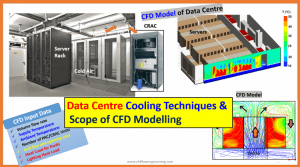
  • Thermal Audits in Data Centers:
    • CFD helps audit the cooling systems of data centers by simulating airflow, heat generation, and cooling patterns.
    • This can lead to more efficient cooling strategies, reducing energy use in these high-demand facilities.
  • Minimizing Hotspots:
    • CFD helps detect thermal hotspots and areas with inefficient cooling, allowing energy auditors to recommend targeted improvements that lower overall energy use
    • Refer Data Center Cooling and its CFD Modeling
  • CFD modeling of data Centre
    CFD modeling of data Centre

Fluid and Gas Flow in Industrial Pipelines

  • Energy Efficiency in Fluid Transportation: In industries where fluids or gases are transported through pipelines (e.g., oil, gas, chemicals), CFD can simulate flow patterns and identify pressure drops or energy losses. This helps auditors recommend optimizations to reduce energy consumption in pumping or compressing systems.
  • Leak Detection and Prevention: CFD is used in energy audits to simulate potential leaks in fluid systems, allowing auditors to recommend preventive measures that minimize energy waste

Conclusion

  • The National Certificate Examination for Energy Managers and Auditors is a valuable opportunity for professionals in the energy sector to enhance their knowledge, skills, and career prospects.
  • It emphasizes the importance of energy efficiency and sustainability in today’s energy landscape. If you have specific questions about the certification process or requirements in a particular country, feel free to ask
  • CFD plays a pivotal role in energy auditing across various sectors, providing detailed insights into energy flow, heat transfer, and system inefficiencies
  • By incorporating CFD into energy audits, professionals can identify optimization opportunities, enhance energy conservation, and improve the overall efficiency of HVAC systems, boilers, renewable energy sources, and industrial processes.
  • This leads to reduced operational costs and environmental impact, aligning with sustainability goals.

Reference Documents & Standards

Standard / Document Description
BEE Energy Audit Manual (Vol. I & II) Step-by-step guide for energy auditing in industries
IS 8753:1977 / BS 845 Boiler efficiency testing standards
ASME PTC 4 Fired steam generators performance test code
EC Act, 2001 Legal foundation for energy audits and BEE formation
ISO 50001 Energy management system standard (aligned with BEE goals)