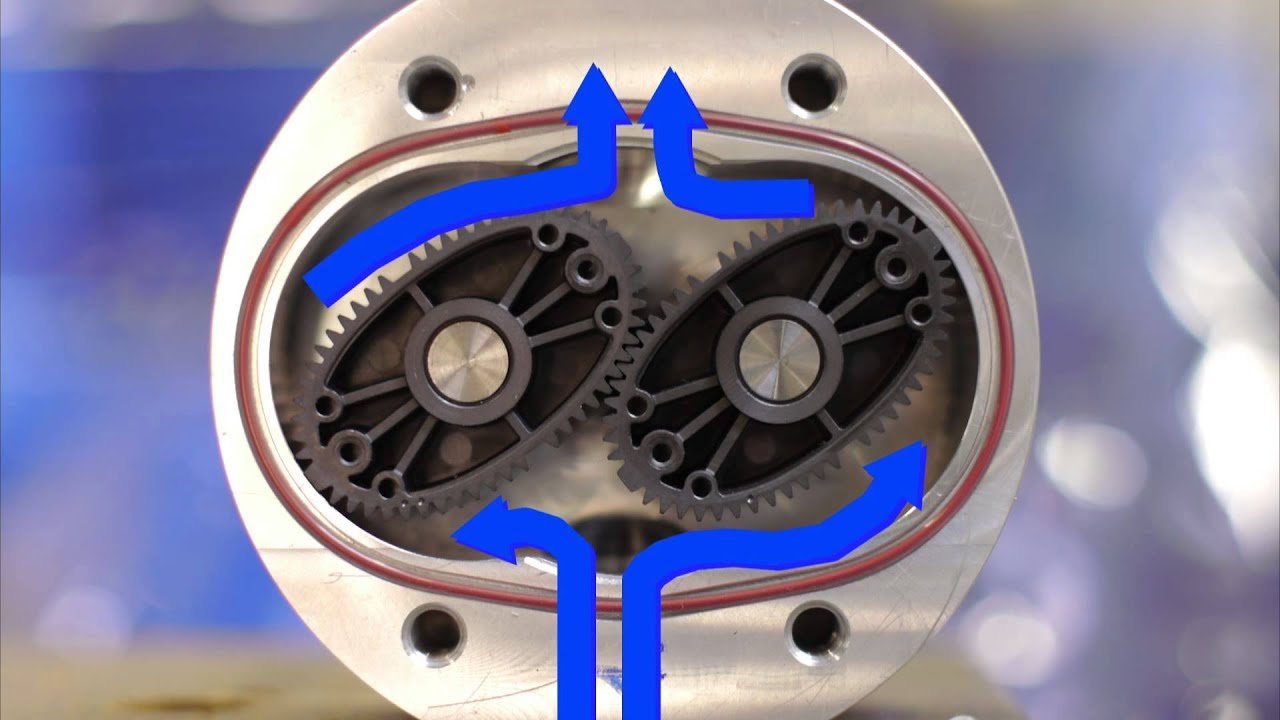
Oval Gear Flow Meter
- Oval gear flow meters are one of the most reliable positive displacement (PD) flow meters used for diesel and other viscous fluid measurement.
- They are widely applied in fuel dispensing, consumption monitoring, and custody transfer. Here’s a structured overview for diesel flow measurement using oval gear meters:
Working Principle
-
Two oval-shaped gears rotate inside a chamber.
-
Each rotation displaces a fixed volume of diesel, independent of viscosity or flow profile.
-
The number of rotations (measured by sensors/magnetic pickups) corresponds directly to the total diesel volume
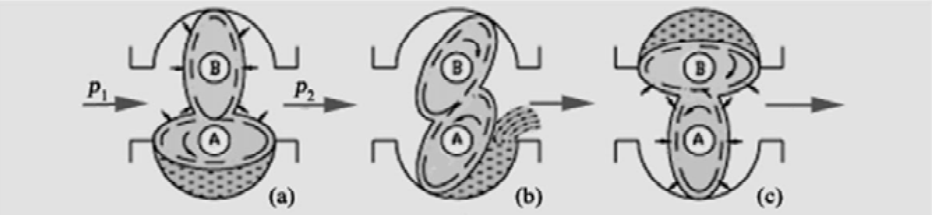

- The fundamental design consists of two precision-machined oval gears that rotate within a measurement chamber. As diesel flows through the meter, it fills the spaces between the gear teeth and chamber walls, creating discrete volumes that are counted as the gears rotate.
- This mechanical principle ensures that each rotation corresponds to a specific volume of diesel, regardless of flow velocity variations. The gear rotation can be detected mechanically through direct coupling or electronically via magnetic sensors, providing both mechanical displays and electronic output signals for modern control systems.
- Oval gear flowmeters are typical positive displacement flow meters featuring large flow range and low pressure loss, particularly suited for high-viscosity fluids like diesel fuel, crude oil, bitumen, resin and so o
- Oval Gear Flow Meters for Diesel Flow Measurement:
- Diesel fuel measurement demands precision, reliability, and durability in industrial applications. Among various flow measurement technologies, oval gear flow meters have established themselves as the gold standard for diesel flow monitoring across multiple industries.
- These positive displacement meters offer unmatched accuracy and consistency, making them indispensable for fuel management systems worldwide.
Advantages in Diesel Applications
- Oval gear positive-displacement flow meters have many advantages
- These meters are the OEM’s preferred choice for measuring non-abrasive, clean liquids such as diesel fuels. Several characteristics make these meters particularly effective for diesel measurement:
High Accuracy:
- Modern oval gear designs can achieve 0.2-0.5% accuracy in fuel consumption applications, essential for custody transfer and precise fuel management.
- This level of accuracy surpasses most other flow measurement technologies (such as liquid turbine flow meter or vortex flow meter) in diesel applications.
Viscosity Independence:
- Unlike turbine flow meter ( TUF) or electromagnetic flow meters, oval gear meters maintain accuracy across varying diesel viscosities, which change significantly with temperature fluctuations.
Wide Flow Range:
- Their large turndown ratio makes them advantageous in various industrial settings, accommodating both low-flow startup conditions and high-demand operational periods.
Flexible Installation:
- Unlike other flow measurement technologies, oval gear meters do not need any straight pipe runs upstream and downstream, making them ideal for retrofit applications and installations with space constraints.
- This flexibility significantly reduces installation costs and complexity.
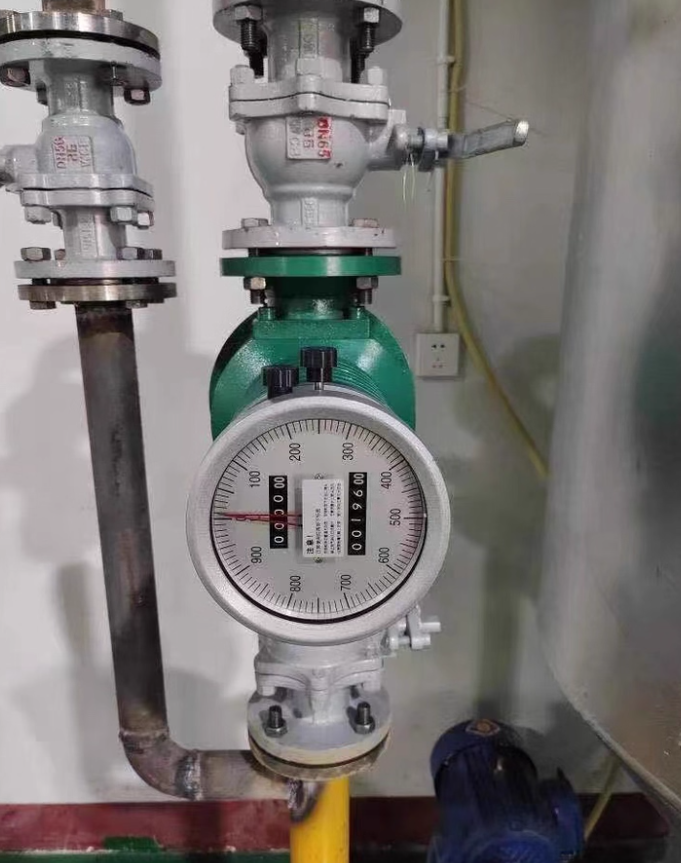
Versatile Display Options:
- These meters offer exceptional versatility with mechanical register heads that operate without external power, making them perfect for remote locations or emergency backup systems.
- For modern applications requiring integration with control systems, electronic versions with 4-20mA output, pulse signals, or digital communication protocols (like MODBUS RTU or HART) are readily available, providing the best of both worlds.
Installation Considerations
- Filtration upstream of the meter protects the precision gears from particulates that could cause wear or jamming. For diesel applications, 100-mesh filtration typically provides adequate protection while maintaining acceptable pressure drop.
- Temperature considerations are crucial since diesel properties change with temperature. Many modern installations include temperature compensation to maintain volumetric accuracy across seasonal variations.
Applications and Industries
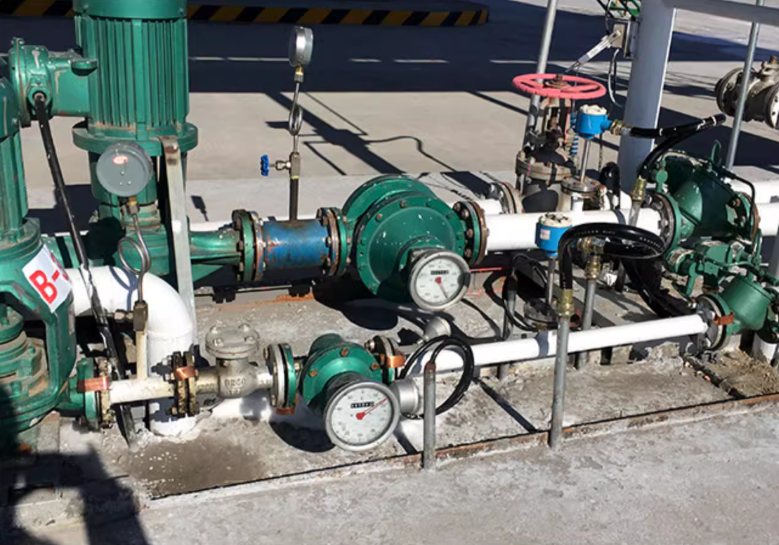
Diesel flow measurement by oval gear flow meter
Oval gear meters have been installed in tens of thousands of fuel measurement projects around the globe, spanning diverse applications:
- Fleet Management: Vehicle fuel consumption monitoring for cost control and maintenance scheduling.
- Marine Applications: Ship fuel consumption measurement for voyage planning and regulatory compliance.
- Power Generation: Diesel generator fuel monitoring for operational efficiency and maintenance planning.
- Construction Equipment: Heavy machinery fuel tracking for project cost management.
- Fuel Distribution: Precise measurement for standard fuels including diesel in fleet, construction, and fuel distribution applications.
Maintenance and Longevity
- Regular maintenance ensures optimal performance and extends service life. Key maintenance practices include periodic calibration verification, filter replacement, and inspection of mechanical components for wear.
- Mechanical oval gear flow meters are particularly effective for tanker loading and unloading operations, where robust construction and reliability are paramount.
- Modern oval gear meters often incorporate self-diagnostic capabilities, alerting operators to potential issues before they affect measurement accuracy.
- This predictive maintenance approach minimizes downtime and ensures consistent performance.
Summary and Conclusion
- Oval gear flow meters represent a mature, proven technology for diesel flow measurement applications.
- Their combination of high accuracy, reliability, and versatility makes them the preferred choice for critical fuel measurement applications.
- As diesel fuel management becomes increasingly important for operational efficiency and environmental compliance, these meters continue to play a vital role in modern industrial operations.
- The investment in quality oval gear flow meter technology pays dividends through accurate measurement, reduced maintenance requirements, and long-term reliability in demanding diesel fuel applications. And we need to find a expert to choose the correct diesel flow meter.
Key Advantages for Diesel
-
High Accuracy → ±0.2% to ±0.5% of reading, ideal for diesel consumption monitoring.
-
Handles Viscosity → Works well with diesel and other viscous fuels (up to several thousand cP).
-
No Flow Conditioning Needed → Not affected much by pipe layout or turbulence.
-
Bidirectional Measurement → Can measure diesel flow in both directions.
-
Durability → Robust design suitable for harsh fuel environments.
Typical Applications
-
Diesel generator (DG) fuel consumption monitoring.
-
Vehicle fuel dispensing systems.
-
Industrial boilers and furnaces fuel feed measurement.
-
Bulk diesel transfer and storage tank monitoring.
-
Custody transfer in fuel supply chains.
Technical Specifications (General Range)
-
Flow Range: 0.5 L/min to 1000 L/min (depending on model).
-
Accuracy: ±0.2% to ±0.5% of reading.
-
Viscosity Range: 2 – 1000 cP (works very well for diesel ~3–4 cP).
-
Temperature: –20°C to +80°C (special versions for higher).
-
Pressure Rating: Up to 25 bar (diesel transfer lines usually <10 bar).
-
Output Options: Pulse output, 4–20 mA, Modbus/RS485, local display.
Limitations
-
Not good for dirty diesel → Requires filtration to prevent gear damage.
-
Pressure drop is higher compared to turbine meters.
-
Mechanical wear over time (gears and bearings).