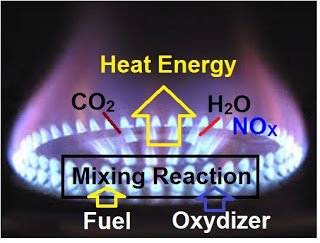
What is Combustion Efficiency (CE)?
Definition
- Combustion efficiency quantifies how well fuel is burned to produce heat.
- It is a measure of how effectively a combustion process converts the chemical energy in a fuel into usable thermal energy.
- It is expressed as a percentage and represents the ratio of the useful energy obtained from the combustion process to the total energy potential of the fuel.
- The ideal combustion process would result in the complete conversion of the fuel into heat, water, and carbon dioxide.
- However, in real-world scenarios, achieving 100% combustion efficiency is challenging due to various factors such as incomplete combustion, heat losses, and the formation of by-products like carbon monoxide and unburned hydrocarbons.
Formula
- The combustion efficiency (η) is often calculated using the formula:
η = (1−Unburned Fuel in Flue Gas /Total Fuel Input)×100
- Here, the unburned fuel in the flue gas represents the portion of the fuel that did not undergo combustion.
- The higher the combustion efficiency, the better the system is at converting fuel into usable energy while minimizing waste products.

- The combustion efficiency of various fuels plays a crucial role in industrial applications, impacting energy efficiency, environmental performance, and overall operational costs.
- Additionally, combined heat and power (CHP) systems, which capture and utilize waste heat, are widely employed to improve overall energy efficiency in various industrial processes
Combustion Efficiency for Various Fuels
- Combustion efficiency measures how effectively a fuel is burned to produce energy.
- It is typically expressed as a percentage and depends on factors like the type of fuel, burner design, and operational conditions.
| Fuel Type | Combustion Efficiency (%) | Notes |
|---|---|---|
| Natural Gas | 90–95% | High efficiency due to clean combustion and ease of control. |
| Diesel | 85–92% | Good efficiency; commonly used in industrial and power generation applications. |
| Coal | 60–85% | Efficiency depends on the quality of coal (bituminous vs. anthracite) and boiler technology. |
| Biomass | 50–85% | Highly variable due to fuel type, moisture content, and combustion technology. |
| LPG (Liquefied Petroleum Gas) | 90–95% | Clean-burning, suitable for industrial heating and processes. |
| Heavy Oil | 70–85% | Lower efficiency due to incomplete combustion and higher emissions. |
| Hydrogen | ~98% | Extremely high efficiency but requires advanced burners for stability. |
Factors Affecting Combustion Efficiency
- Fuel Quality: High-purity fuels like natural gas yield higher combustion efficiency compared to impure fuels like biomass or low-grade coal.
- Burner Design: Advanced designs like low NOx burners enhance efficiency.
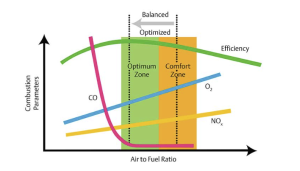
- Air-Fuel Ratio: Proper mixing ensures complete combustion. Too much air causes heat loss, while insufficient air leads to incomplete combustion.
- Temperature Control: Maintaining optimal combustion temperatures minimizes energy loss.
- Moisture Content: Higher moisture in fuel reduces efficiency by consuming energy for water evaporation.
- Here’s a breakdown of combustion efficiency for different fuels and their industrial applications:
Hydrogen
- Hydrogen has the potential for high combustion efficiency since its combustion product is mainly water vapor.
- However, practical challenges, such as storage and transportation, need to be addressed for widespread use.
- Industrial Applications:
- Being explored for use in various industries, including manufacturing and transportation, as a clean energy carrier.
- Hydrogen’s application is found in fired heaters and boilers using raw fuel gases that contain more than 60% hydrogen
Natural Gas:
- Combustion Efficiency: Natural gas
- Its high combustion efficiency, often exceeding 90%.
- Industrial Applications:
- Widely used in industrial boilers, furnaces, and combined heat and power (CHP) systems.
- Natural gas is a popular choice in industries such as manufacturing, chemical processing, and power generation.
- Natural gas like PNG, LPG, and CNG have been used for domestic cooking and automobiles
Diesel Fuel:
- Combustion Efficiency: Diesel engines generally exhibit high combustion efficiency, especially in industrial applications like power generation and transportation.
- Industrial Applications: Commonly used in industrial backup generators, transportation (trucks, ships, locomotives), and off-road equipment.
Coal:
- Combustion Efficiency: Combustion efficiency for coal can vary, with older coal-fired power plants typically having lower efficiency compared to newer, more advanced technologies.
- Industrial Applications: Historically used in power plants for electricity generation, as well as in various industries for process heat. Transitioning to cleaner technologies due to environmental concerns.

Biomass:
- Combustion Efficiency:
- It is highly dependent on the type of biomass and combustion system.
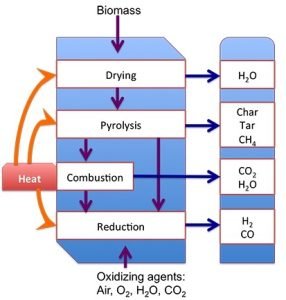
- Advanced biomass boilers and combined heat and power (CHP) systems can achieve good efficiency.
- Industrial Applications:
- Used in industries such as pulp and paper, food processing, and bioenergy production.
- Biomass is often employed for both heating and power generation.
Propane:
-
- Combustion Efficiency: Propane has a high combustion efficiency.
- Industrial Applications: Used in industrial processes, heating applications, and as a fuel for vehicles. Propane is often chosen for its clean-burning properties and ease of storage and transportation.
Methane (Biogas):
-
- Combustion Efficiency: Combustion efficiency for methane (biogas) is generally high.
- Industrial Applications:
- Used in industries with access to biogas sources, such as wastewater treatment plants, landfills, and agricultural operations.
- Biogas is a renewable energy source derived from organic waste

How to improve Combustion Efficiency?
- Improving combustion efficiency is crucial for several reasons, including energy conservation, reducing environmental emissions, and optimizing the performance of combustion-based systems such as boilers, furnaces, engines, and power plants.
- Engineers and researchers employ various techniques to enhance combustion efficiency, such as optimizing air-fuel ratios, improving burner designs, and implementing advanced control systems.
- Improving combustion efficiency involves optimizing the combustion process to achieve better energy utilization and reduce waste. Here are several ways to enhance combustion efficiency:
Selection of Optimize Air-Fuel Ratio
- Ensure the correct air-fuel ratio for combustion. Too much or too little air can lead to inefficiencies.
- Utilize oxygen sensors and combustion analyzers to monitor and adjust the air-fuel mixture in real time.

Effect of excess air on combustion efficiency
- Excess air in combustion refers to the amount of air supplied to the combustion process beyond the theoretically required amount for complete combustion.
- While some amount of excess air is often necessary for practical combustion applications, excessive levels can have significant effects on combustion efficiency
- Incomplete Combustion:
- Too much excess air can lead to incomplete combustion. This occurs when the quantity of oxygen available is more than what is required for the complete oxidation of the fuel.
- Incomplete combustion results in the production of unburned fuel, carbon monoxide (CO), and other harmful pollutants. This not only reduces combustion efficiency but also increases emissions.
- Reduced Flame Temperature:
- Excessive air can lower the flame temperature by diluting the concentration of reactants.
- Lower flame temperatures reduce the efficiency of heat transfer to the working fluid (e.g., water or air), impacting the overall thermal efficiency of the combustion process.
- Increased Heat Losses:
- Additional air introduced into the combustion process can lead to increased convective and radiative heat losses.
- Higher heat losses mean less heat is transferred to the intended application (e.g., a boiler or engine), resulting in reduced overall efficiency.
- Wasted Energy:
- The energy required to heat excess air contributes to wasted energy and reduces the effective utilization of the fuel’s energy content.
- This wasted energy increases operational costs and decreases the overall efficiency of the combustion system.
- Higher Nitrogen Oxide (NOx) Emissions:
- Excess air can contribute to elevated temperatures, leading to increased nitrogen oxide (NOx) formation during combustion.
- NOx emissions are a major concern due to their environmental impact and contribution to air pollution.
- Incomplete Combustion:
- It’s important to note that the optimal level of excess air can vary depending on the type of fuel, combustion system design, and operational conditions.
- Regular monitoring, tuning, and control of the air-fuel ratio based on combustion analysis can help maintain optimal combustion efficiency while minimizing emissions and energy losses.
- Advanced control systems and combustion modeling, such as Computational Fluid Dynamics (CFD), can also aid in achieving and maintaining the desired air-fuel ratio for efficient combustion
Regular Maintenance:
- Perform routine maintenance on combustion equipment to ensure clean and properly functioning burners.
- Clean and inspect burners, nozzles, and heat exchangers regularly to remove any deposits that can affect efficiency.
Prevent Heat Loss:
- Insulate combustion equipment to minimize heat losses and improve thermal efficiency.
- Seal air leaks in combustion chambers and duct work to prevent the escape of hot gases.
Use High-Efficiency Equipment:
-
- Upgrade to modern, high-efficiency burners and combustion systems.
- Consider investing in advanced technologies, such as condensing boilers or combined heat and power (CHP) systems, which capture and utilize waste heat.
Implement Combustion Controls:
-
- Use advanced control systems to optimize combustion parameters in real time.
- Incorporate variable speed drives and modulation controls to match the combustion output with the load requirements.
Monitor and Tune Systems:
- Regularly monitor combustion processes using sensors and instrumentation.
- Conduct periodic tuning of combustion systems to ensure optimal performance under different operating conditions.
Install Flue Gas Heat Recovery:
- Capture and utilize waste heat from flue gases through heat recovery systems.
- Implement economizers or air preheaters to preheat combustion air using the recovered heat.
Consider Alternative Fuels:
- Explore the use of alternative and renewable fuels that may have higher combustion efficiency or lower environmental impact.
- Evaluate the feasibility of using biofuels, hydrogen, or other clean energy sources.
Training on Basics of Combustion
- Ensure operators and maintenance personnel are well-trained in the proper operation and maintenance of combustion equipment.
- Provide ongoing education about energy-efficient practices and the importance of combustion optimization.

turbulent combustion
CFD Modeling to Improve Combustion Efficiency
- Computational Fluid Dynamics (CFD) modeling is a powerful tool used to optimize combustion processes and improve combustion efficiency in various applications.
- Here’s how CFD modeling can contribute to enhancing combustion efficiency:
Understanding Combustion Physics:
-
- CFD simulations provide insights into the complex fluid flow, heat transfer, and chemical reactions occurring during combustion.
- By modeling the fundamental physics of combustion, and its modeling helps engineers understand combustion dynamics and identify areas for improvement.
Optimizing Combustion Chamber Design:
- CFD allows engineers to analyze different combustion chamber geometries, burner configurations, and fuel injection strategies virtually.
- By simulating various design iterations, engineers can identify the most efficient combustion chamber layout to promote better mixing, minimize heat losses, and enhance combustion stability.
Improving Fuel-Air Mixing:
- Efficient fuel-air mixing is critical for achieving complete combustion and minimizing emissions.
- CFD modeling helps optimize burner designs and airflow patterns to ensure thorough mixing of fuel and oxidizer, thereby improving combustion efficiency.

Reducing Pollutant Emissions:
- CFD simulations enable the prediction of pollutant formation mechanisms, such as nitrogen oxides (NOx) and carbon monoxide (CO), during combustion.
- By understanding the factors influencing emission formation, engineers can develop strategies to reduce pollutant emissions while maintaining high combustion efficiency.
Optimizing Turbulence and Combustion Kinetics:
- Turbulent flow plays a significant role in promoting mixing and enhancing combustion efficiency.
- CFD models can incorporate turbulent flow simulations and detailed chemical kinetics to predict combustion performance accurately.
- By optimizing turbulence parameters and combustion kinetics, engineers can improve combustion efficiency and reduce fuel consumption.
Analyzing Heat Transfer and Thermal Management:
-
- CFD simulations help assess heat transfer mechanisms within combustion systems and optimize thermal management strategies.
- Engineers can identify areas of high heat transfer and implement measures to recover waste heat and improve overall energy efficiency.
Validating Experimental Data:
-
- CFD models can be validated against experimental data obtained from combustion test rigs or real-world installations.
- By comparing simulation results with experimental measurements, engineers can verify the accuracy of the CFD model and gain confidence in its predictive capabilities.
Iterative Design and Optimization:
-
- CFD modeling enables engineers to perform iterative design and optimization studies quickly and cost-effectively.
- By systematically exploring design parameters and operating conditions, engineers can identify optimal configurations that maximize combustion efficiency and minimize environmental impact.
Summary
- Optimizing combustion efficiency in industrial settings is crucial for minimizing energy waste and reducing emissions.
- Industries often invest in advanced combustion technologies, control systems, and regular maintenance to enhance efficiency and comply with environmental regulations
- CFD modeling serves as a valuable tool for improving combustion efficiency by providing detailed insights into the underlying processes
- optimizing system design, and guiding engineering decisions towards more sustainable and efficient combustion solutions.
References
- Science Direct, Overview of Combustion Efficiency
- The US. Dept. Energy, Boiler combustion Efficiency Calculation
- Control System, Combustion efficiency Calculations