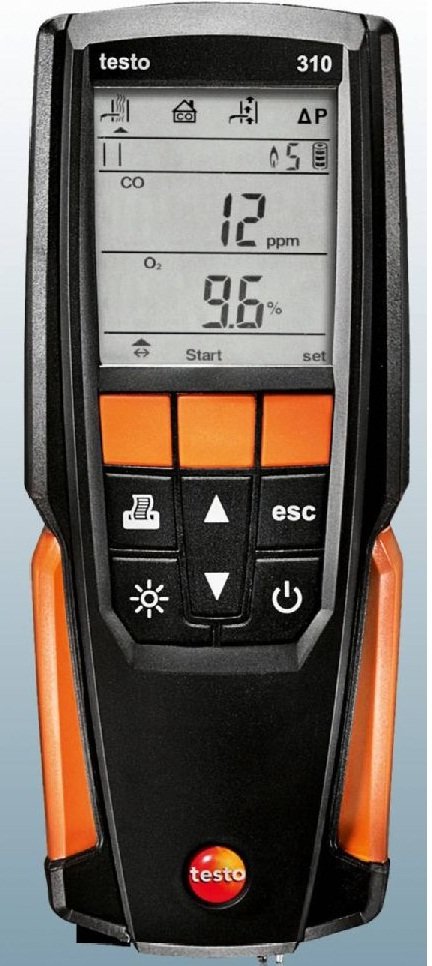
Flue Gas Analyzer
- A flue gas analyzer is an essential tool for measuring and analyzing the composition of flue gases emitted by combustion processes.
- These analyzers help ensure combustion efficiency, safety, and regulatory compliance by providing real-time data on various gas concentrations. Here’s an in-depth look at flue gas analyzers:
Components of a Flue Gas Analyzer
- Sampling System:
- Probe: Inserted into the flue or stack to extract a representative gas sample.
- Pump: Draws the gas sample through the analyzer.
- Filters: Remove particulates and moisture from the gas sample to prevent contamination and damage to the analyzer.
- Sensors and Detectors:
- Electrochemical Cells: Used for measuring gases like O2, CO, NO, and NO2.
- NDIR Sensors: Non-Dispersive Infrared sensors for CO2, CO, and hydrocarbons.
- Chemiluminescence Detectors: For NOx measurement, where NO reacts with ozone to produce light.
- Thermal Conductivity Detectors: Sometimes used for CO2 measurement.
- Data Processing Unit:
- Microprocessor: Analyzes sensor data and calculates gas concentrations.
- Display: Shows real-time measurements and diagnostic information.
- Data Logging: Stores historical data for trend analysis and reporting.
- Calibration System:
- Zero Calibration: Uses clean air or nitrogen to set a baseline.
- Span Calibration: Uses standard gas mixtures with known concentrations for calibration.
Key Measurements
- Oxygen (O2):
- Indicates combustion efficiency.
- Low O2 levels can suggest incomplete combustion.
- Carbon Monoxide (CO):
- Indicates incomplete combustion and potential safety hazards.
- High CO levels can be harmful and indicate poor combustion control.
- Carbon Dioxide (CO2):
- A primary product of combustion.
- Higher levels indicate more complete combustion.
- Nitrogen Oxides (NOx):
- Includes NO and NO2.
- Indicates combustion temperature and fuel nitrogen content.
- High levels contribute to environmental pollution and acid rain.
- Sulfur Dioxide (SO2):
- Produced from sulfur in the fuel.
- Contributes to acid rain and requires control in many regions.
- Unburnt Hydrocarbons (HC):
- Indicate incomplete combustion.
- High levels can indicate combustion inefficiency or equipment malfunction.
Types of Flue Gas Analyzers
- Portable Flue Gas Analyzers:
- Handheld devices used for spot checks and maintenance.
- Easy to transport and use on different equipment.
- Typically have a limited number of sensors but offer sufficient accuracy for routine checks.
- Continuous Emission Monitoring Systems (CEMS):
- Fixed installations for continuous monitoring of emissions.
- Provide real-time data for regulatory compliance and process control.
- More comprehensive, with multiple sensors and advanced data logging capabilities.
Operation and Maintenance
- Setup:
- Place the probe into the flue or stack at a representative sampling location.
- Ensure proper probe positioning to avoid stratification effects.
- Calibration:
- Perform zero and span calibration regularly.
- Use certified calibration gases to maintain accuracy.
- Maintenance:
- Regularly inspect and replace filters to prevent clogging.
- Check and replace sensors as needed, as they have a limited lifespan.
- Periodically clean the probe and sampling lines to prevent buildup.
- Data Management:
- Regularly download and analyze logged data.
- Use data to identify trends, optimize combustion processes, and ensure compliance with emission regulations.
Applications
- Industrial Boilers and Furnaces: Ensuring optimal combustion and compliance with emissions regulations.
- Power Plants: Monitoring emissions from coal, gas, or oil-fired plants.
- Waste Incinerators: Controlling and monitoring emissions from waste combustion.
- HVAC Systems: Ensuring efficient operation and safe emissions in heating, ventilation, and air conditioning systems.
- By utilizing a flue gas analyzer, operators can ensure efficient combustion, reduce harmful emissions, and comply with environmental regulations, ultimately leading to safer and more sustainable operations.
- Measuring NOx (nitrogen oxides), CO (carbon monoxide), and unburnt carbon in flue gases is crucial for monitoring and controlling emissions from combustion processes. Here’s an overview of the methods and instruments used for these measurements:
Nitrogen Oxides (NOx)
Instruments and Methods:
- Chemiluminescence Analyzer: This is a common method for measuring NOx. It detects the light emitted during the reaction between NO and ozone (O3). The intensity of the emitted light is proportional to the NO concentration. For NO2 measurement, a converter is used to convert NO2 to NO.
- Non-Dispersive Infrared (NDIR) Analyzer: This method uses infrared light absorption to measure NOx concentrations. The amount of absorbed IR light is proportional to the gas concentration.
Measurement Carbon Monoxide (CO)
- Measuring carbon monoxide (CO) in flue gases is a critical task in monitoring combustion efficiency and environmental compliance.
- Here’s a detailed overview of the methods and instruments used for this measurement:
Unburnt Carbon Measurement
Instruments and Methods:
- Carbon in Ash (CIA) Analysis: This method involves collecting particulate matter (PM) from flue gases and analyzing the carbon content in the collected ash. Techniques like the loss on ignition (LOI) or direct combustion in an oxygen atmosphere followed by CO2 measurement can be used.
- Filter Sampling and Gravimetric Analysis: Particulate matter is collected on filters, and the carbon content is determined by analyzing the collected material using methods like thermal-optical analysis or elemental carbon/organic carbon (EC/OC) analysis.
- Online Carbon Analyzers: These instruments measure unburnt carbon in real-time by using thermal or catalytic oxidation techniques followed by detection methods such as NDIR for CO2 or flame ionization detection (FID) for hydrocarbons.
General Procedure for Measuring Emissions in Flue Gases:
- Sampling: Extract a representative gas sample from the flue gas stream. This can be done using a probe inserted into the flue duct.
- Conditioning: Condition the sample to remove particulates, moisture, and other interfering substances. This may involve filtration, condensation, and/or drying.
- Detection and Analysis: Use appropriate analyzers to measure the concentrations of NOx, CO, and unburnt carbon in the conditioned sample.
- Data Recording and Processing: Record the measurements and process the data to obtain emission concentrations. This can involve converting the raw data to standard conditions, averaging, and comparing with regulatory limits.
Calibration and Maintenance
- Regular calibration using standard gas mixtures is essential to ensure accurate and reliable measurements.
- Periodic maintenance of the sampling system and analyzers is necessary to prevent contamination, leaks, and other issues that can affect the accuracy of measurements.
Accurate measurement of these pollutants is crucial for regulatory compliance, optimizing combustion efficiency, and minimizing environmental impact.